by Samantha McClain, Editor-In-Chief
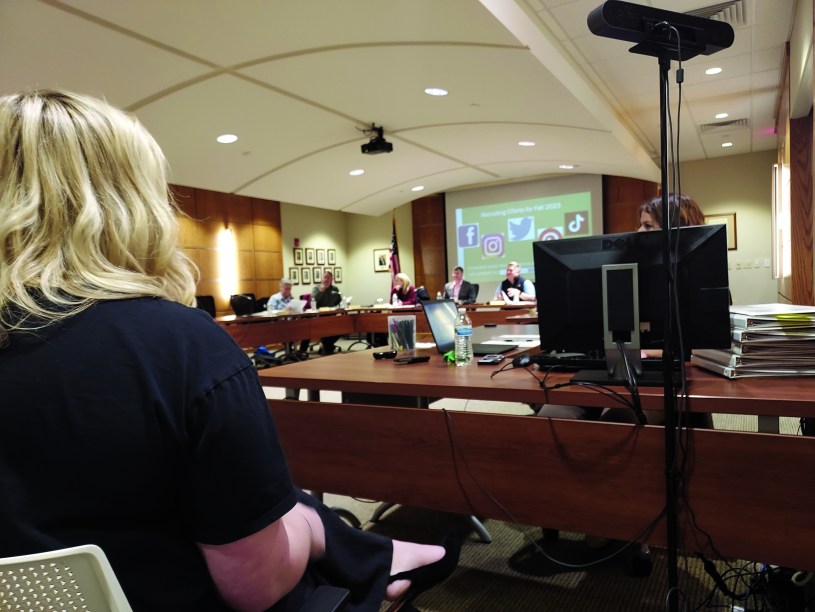
Students attending NWACC will soon pay a $4 per credit hour activity fee to support the college’s athletic program and student activities. On March 13, the Board of Trustees approved the $4 per credit hour activity fee for students. The fee will take effect on July 1, the start of the 2024 fiscal year. There is also an increase in culinary program lab fees and a possibility of hiring a full-time sports director. The culinary program lab fee was $325, but due to the increase in the cost of supplies, it has increased by $70, and the total amount will be $395.
The activity fee will build the amount to over $470,000 over five years on average, vice president of student services Justin White said.
The trustees approved the activity fee in a 5 – 3 vote. Trustees Ron Branscum, Todd Schwartz, Amber Latimer, Lori Frank, and Jonathan Woods voted for it. However, Joe Spivey, Rachel Harris, and Carolyn Reeves voted against it.
While Spivey does support the sports program, he mentioned that some students could barely afford books and parts of the tuition. The time for charging students who are struggling with basic needs is not now and processes for funding programs like the sports program should start slowly, Spivey said.
Drake Schwartz, Student Government President and Student Trustee, was unsure he wanted to support the fee when the idea was first presented to the SGA. Then he said he thought about what it meant for student life. It is going to allow students to expand the range of possibilities, especially with club fundings, Schwartz said. Part of the goal of the student activity fee is to encourage students to stay on campus and have an opportunity to play sports locally.
“I am really excited because it will allow NWACC to expand and allow the students to have the opportunity to build more of a community here,” Schwartz said.
The amount accumulated through the student activity fee will be split to Student Clubs and Student Activities. Student activities go beyond Student Life activities and could go towards Spring Arts and Culture or Academics, Cierra Collins, director of Student Life, said.
For clubs to get funds, registered clubs (Registered Student Organization) will receive RSO funds worth $2,000. Out of the $2,000, $200 will be divided per club and help students afford food, community service events, conventions, and other activities, Collins said.
Different considerations were discussed, talking about the amount that should be charged per student. According to northark.edu, the North Arkansas College activity fees cost $9 per credit hour. According to uarichmountain.edu, the University of Arkansas Rich Mountain has a student activity fee of $6 per credit hour. However, Arkansas Tech University charges $2.60 per credit hour, according to atu.edu.
To split the money, the cabinet assesses and reviews the budget throughout the year. The money will be the seed money for athletic programs at NWACC, Rittle said.
The Board of Trustees all voted for a full-time athletic director. It is in the works to determine who is going to be hired and whether there is going to be a student present on the committee, Schwartz said.
The Board of Trustees previously had adult education and community college updates. On Feb. 13, Ben Aldama and Dakota Shelton presented an overview of the Adult Education program.
The Adult Education program provides various services to students who are returning to classes and want to become self-sufficient by gaining the skills necessary for higher education, future employment, and personal success, according to nwacc.edu. The program provides scholarships and has partnered with the state of Arkansas to provide funds for expenses such as transportation, work necessities, and childcare. It also has the English for Language Learners program, which offers General Education Development (GED) and Adult Basic Education (ABE).
According to the meeting agenda, in 2021-2022, the services provided have helped 841 individuals, and in July 2022 – Feb. 2023, 718 individuals were helped in Benton County. NWACC has seen consistent growth in GED graduates, with the highest being 203 in 2021-2022.
“As an adult education instructor, I really enjoy being a part of this program,” said Shelton, ASE Instructor and ADA Coordinator. “Getting to witness lives being changed by students obtaining their high school diploma or learning English is an incredible Experience.”
According to the meeting agenda, the students enrolled in college classes and part of the Adult Education saw higher numbers in pre-pandemic years but have fallen after the pandemic.
In the Board of Trustees meeting, the millage election has been discussed on the ballot, and early voting will begin on May 2. The election date will occur on May 9, and the ballot proposes to restore approximately $1.8 million annually in lost funding to NWACC.
According to a flier, the ballot measure will restore NWACC’s millage to the 3.0 rate initially approved by voters in 1989. This measure would cost the average homeowner only $20 – $25 more per year.
According to a study by Lightcast, NWACC has contributed over $250 million annually and supports more than 3,000 jobs. For the community in NWA, the money will help expand workforce training programs for skilled trades and continue discounted tuition for Rogers and Bentonville school districts.
 Eagle View Blog & Community Media