by Bryce Watson, Contributor and Adam Bannister, Contributor
The notion of living fearlessly was a common theme in Mitchell’s March 7 presentation at the NorthWest Arkansas Community College. Mitchell, an investigative journalist with the Mississippi Center for Investigative Reporting, spoke to approximately 80 students, faculty, and guests as part of the Springs Arts & Culture Festival. Mitchell and Alice Wong were the two featured speakers for the week-long interdisciplinary festival.
Bringing Mitchell to NWACC was an effort to shed light on the problem of racism and the value of “real journalism,” according to history professor Gene Vinzant, who introduced Mitchell. Vinzant said he believes that Mitchell’s message encourages real journalism that gets down to the “nitty gritty” and doesn’t shy away from topics such as racism.
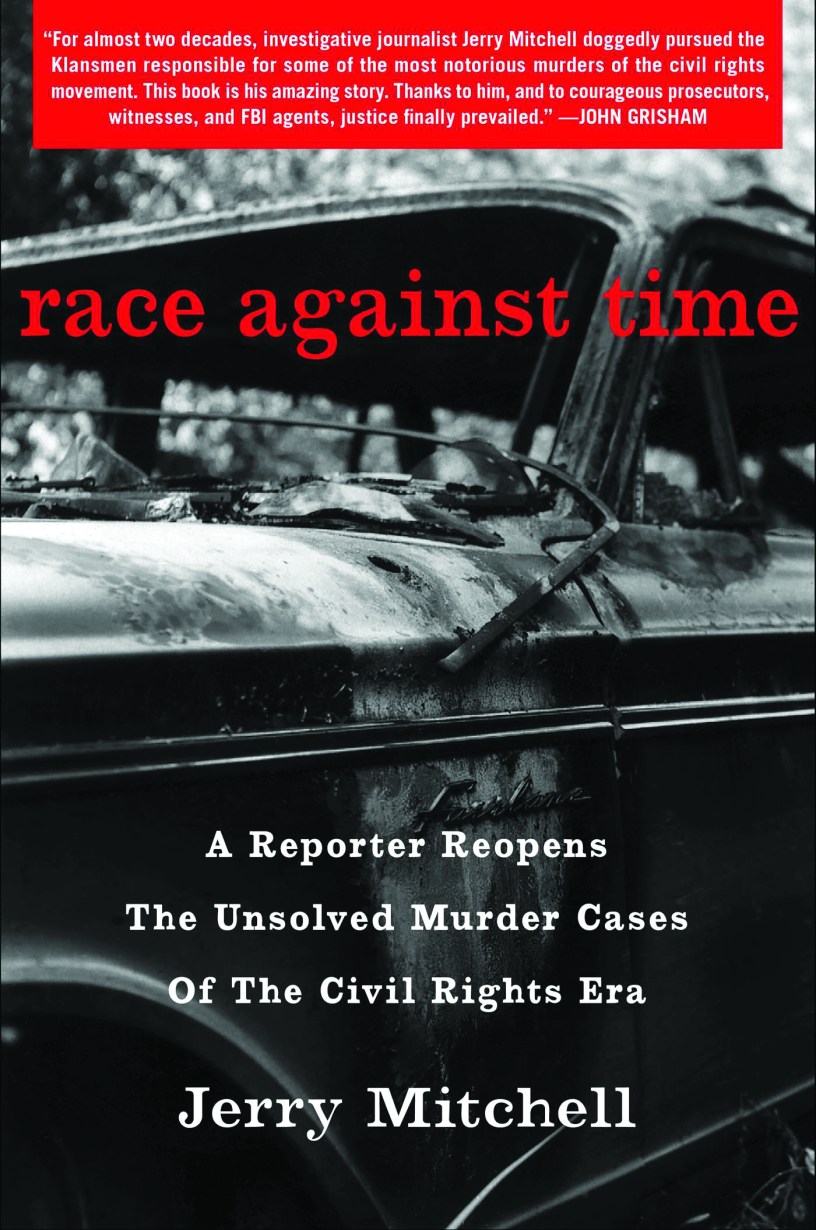
Mitchell spoke on his reporting career and the role he played in bringing a handful of Ku Klux Klan members to justice in murders that took place in the South during the civil rights era of American history. The cases included the murder of Medgar Evers, the “Mississippi Burning” case in which three civil rights workers were killed, the 16th Street Baptist Church bombing in Birmingham that killed four African American girls, and the firebombing of the home and store of NAACP and civil rights leader Vernon Dahmer.
Mitchell’s work at the Jackson Clarion-Ledger led him to have face-to-face interviews with those responsible for the deaths. Mitchell detailed how he spoke with Byron De La Beckwith, the man who murdered Medgar Evers, for over six hours at his home just outside of Chattanooga, Tennessee. Prior to Mitchell’s interview, De La Beckwith had been tried twice for killing Evers, and each of those trials ended with hung juries. Mitchell’s reporting had helped lead to the re-opening of the case. In Mitchell’s remarks at NWACC, he discussed the challenges of listening to De La Beckwith, who often used racial slurs and spouted white Christian Identity ideas. The journalist asked his audience if they had experienced something akin to talking with somebody “and afterwards feel like you need a bath.”
Mitchell also interviewed the Birmingham church bomber Bobby Cherry, which later led to Cherry’s being arrested when Mitchell was able to find flaws in his story. Specifically, Mitchell noted that Cherry had claimed to be at home “watching wrestling” the night the bomb was being placed at the church. After investigating, Mitchell found that there hadn’t been wrestling on television for over three years in that area.
Ryan Owens, an NWACC student and audience member, said he found Mitchell’s attention to detail an important aspect of the reporter’s presentation. “It was an insightful perspective of the minutiae of investigative journalism,” Owens said. “The open interviews with the suspects, who were all involved in the Klan, were interesting. Neutral reporting to uncover the facts is important and a good vice to have.”
Mitchell’s reporting tenacity was clear in his comments about digging for records from the past that were supposed to be under seal. “If someone tells me I can’t have something, I want it a million times worse,” he said.
Not everyone supported the idea of pursuing justice in decades-old cases. Mitchell said he was often asked why he didn’t just leave these individuals who were now old men alone. His response was, “These are young killers that just happened to get old.”
In discussing his work, Mitchell discussed how he was able to not live without fear but to live beyond fear. He described it as living for something greater than himself, a theme tied to his presentation’s opening when he shared the words on the headstone of James Chaney. Chaney was one of three civil rights workers killed in what has been referred to as the Mississippi Burning case. Mitchell quoted from Chaney’s headstone: “There are those who are alive, yet never live. There are those who are dead, yet will live forever. Great deeds inspire and encourage the living.”
At the end of his speech, Mitchell came back to that thought with a challenge to the audience: “What do you want your headstone to say? You’re carving it every day.”
 Eagle View Newspaper