
3rd District Contest Pits Incumbent Womack Against Challenger Penzo
By Morgan Nunley
Eagle View Managing Editor – News & Sports
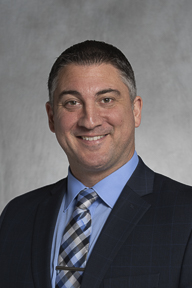
The 3rd Congressional District of Arkansas is up for a party nomination vote in the March primary as the long-standing Republican incumbent Steve Womack will go against Republican Arkansas Senate member Clint Penzo.
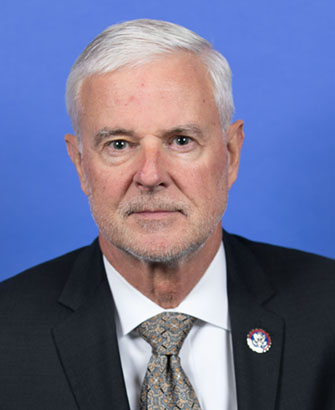
The race is Womack’s third GOP primary race since he was elected to Congress in 2010. It is Penzo’s first race for the U.S. House of Representatives seat. The two men vying for their party’s nomination present different backgrounds, political stances, and areas of emphasis in their campaigns. Womack graduated from Russellville High School in 1975 and graduated from Arkansas Tech University with a Bachelor of Arts in 1979. It was not too long after graduating college that Womack enlisted in the Arkansas Army National Guard, where he served for 30 years, until his retirement in 2009. Womack served as a station manager for a radio station from 1979 to 1990.
Penzo was a graduate of Springdale High School and a graduate of NWACC with a degree in Physical Therapy, and from the University of Arkansas with a Bachelor of Science in Earth Science. Before graduating college, Penzo worked in retail at places like Walmart and Harps. After college, he spent his first five years in healthcare, and then 19 years in real estate, helping build the NWA area.
Both men have different upbringings and values, while also sharing some similarities, with the most notable being that both men are Republican and cite their conservative values in making a case for election.
Penzo has stated that some of his core concerns and stances include “fighting for individual liberty and limited government, opposing vaccine mandates and opposing tax increases.” Penzo’s campaign website included other topics such as illegal immigration, national debt, sanctity of life, law enforcement and veterans, as well as limits on the federal government and firearm regulations.
Womack’s core set of concerns in his bid for re-election includes supporting the military, continuing to fight the administration’s “far-left agenda,” serving the needs of his constituents, as well as addressing the federal budget and the nation’s rising deficits. Other priorities listed on his campaign website were abortion, agriculture, budget, defense, education, energy, foreign affairs, healthcare, immigration, small business, Social Security, tax reform, and transportation.
Arkansas’ 3rd Congressional District covers Northwest Arkansas and also includes Fort Smith. The winner of the Republican primary will face Democratic candidate Caitlin Draper Mattelin in the Nov. 5 general election. She is unopposed in the March 5 Democratic Primary.
To get some varied perspectives, political science professors Matt Evans of NWACC and Daniel Bennett of John Brown University weighed in on their expectations of the race. Bennett said Womack’s main advantage in March 5 balloting is being an incumbent, especially in a primary election. “The fact that he can claim credit and experience as a conservative Republican in a conservative district gives him a major leg up on his challengers,” he said.
Bennett said Womack’s main advantage in March 5 balloting is being an incumbent, especially in a primary election. “The fact that he can claim credit and experience as a conservative Republican in a conservative district gives him a major leg up on his challengers,” he said.
Bennett said one of Penzo’s major political arguments may weigh in his favor in the race. The argument is that the incumbent, Womack, is disconnected from the district and spends too much time in and focused on the nation’s capital. Bennett stated that Penzo is also seeking to capitalize on the difference between Womack and himself in supporting former President Trump at the top of the ticket. Bennett said that Penzo is banking on these voters to oust Womack in favor of a more “Trump” Republican.
When speaking of who is more likely to prevail in the GOP primary, Bennett leaned to the side of the incumbent Womack, acknowledging him as “definitely the favorite in this election.” Bennett cited Womack’s financial advantage, name recognition, his record of service, and his experience as an incumbent going up against a relatively “new face.”
Evans, a political science professor at NWACC, provided his input and viewpoint on Womack by emphasizing that some people will be encouraged by his experience in local and national government. (Womack served as a city council member and the mayor of Rogers before being elected to Congress.) It can be argued that Womack understands the “federal bureaucracy, legislative process in Congress, local governance, and local institutions is NWA,” he said. Evans was quick to point out Womack’s expertise, experience, ability, and accomplishments in Congress and around the area as the key beneficial qualities that Womack has in this primary. Evans countered this by implying Penzo’s victory may come due to other voters finding Womack’s position out of line with where the party stands, in reference to the right-wing populism from Donald Trump. This includes “cracking down on the borders, cutting what is perceived as wasteful federal spending, protecting local industry from foreign competition, and being sufficiently loyal to Trump as a leader of the party.” Some may see Penzo, the newcomer to DC politics, as the answer.
Evans said he thinks that Penzo’s message through his campaign and billboards is straightforward, but that he isn’t sure how it lands with the people of NWA. Womack seems like he “possesses a favorable public opinion in contrast to a negative public view of Congress.”
Both candidates have key issues that they address on both their ads and campaign websites. Evans expects that both will spend a lot of their time campaigning with topics like “immigration, federal spending, the national debt, wars in Ukraine and Gaza, inflation and cost of living, and Hunter Biden.” Evans encouraged the addressing of the costs of the Ukraine War, the national debt, and the ending of the civilian deaths in Gaza.
Evans also keyed in on some issues that he would like to see, specifically regarding the state of Arkansas. He cited the great amount of poverty in the state and the costs of living, as well as the addressing of economic mobility and precarity.
Voter turnout has been low both in the state of Arkansas and in the country over the last few years and decades, especially in the mid-term years when there is no presidential election. Evans said he thinks multiple things could be done to increase voter turnout in the area and in the country.
Evans suggested that Arkansas adopt the ranked voting system, similar to what Alaska has. Evans argues this allows for more “nuanced voter expression” and will allow them to outwardly convey their preferences. Evans also thinks that the Democrats and the independents need to openly show their candidates and continue to push their message.
Bennett said he thinks that the problem with voter turnout locally is more internal and that we should look more toward education about voting and how elections work to get more people involved. “Letting people know why elections matter is a good start, rather than simply making it easier to vote,” he said.
Both the political experts expressed hope for the state’s future in regard to voter turnout and the competitiveness of the upcoming primaries, elections, and debates. Bennett stated that he expected the voter turnout to diversify as the district expands and continues to grow in population.
 Eagle View Blog & Community Media