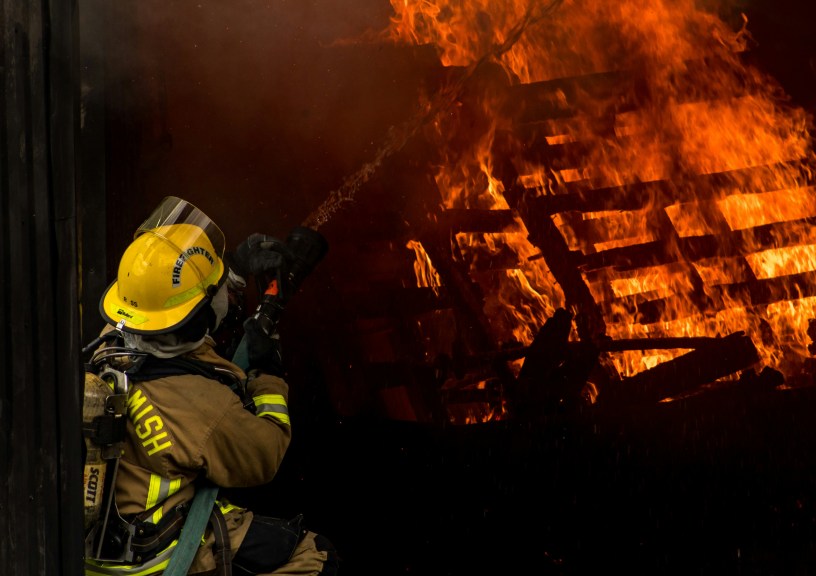
Avoca Fire Department seeks first hike since 2007
By Delaney Reaves
Eagle View Editor-In-Chief
The Avoca Fire and Rescue Department is looking at an increase of dues to $125 per household this spring in the first dues increase question since 2007. Voters in the fire department area will see the proposal on the March ballot.
The Avoca Fire Department has had dues of $50 for the past 17 years. The department started in 1979 with dues being set at $25 per household. Voters will consider the increase request on March 5, along with casting votes in the presidential primaries and nonpartisan judicial contests. If the question on the March 5 ballot is approved, the Avoca dues will increase to $125. If residents voted against the increase, the dues will stay at $50.
According to the resolution and ordinance document on bentoncountyar.gov, the volunteer fire department requires “annual dues to provide adequate fire and rescue protection in its service area.”
“The costs have risen since 2007 to the point that annual dues of $50 are no longer sufficient for the Avoca Fire & Rescue department to provide safe and adequate protection in its service area,” the document states.
The annual dues would fall on each residence including businesses that have a structure established within the district of the volunteer-run Avoca fire department. This change would be listed on real property tax statements, collected near the same time and manner as the real property taxes handled annually. This comes into accordance with A.C.A. 14-20-108, Arkansas code that allows requests to be filed to the Quorum Court regarding volunteer fire departments.
According to the Benton County Quorum Court meeting agenda, on Dec. 19, 2023, the third and final reading of the proposal ordinance occurred to call a special election. The question proposed “Increasing the Annual Dues of The Avoca Fire and Rescue Department for Fire Protection Services; Designating the County Official Who Will Collect and Remit the Annual Dues Charged by The Department; And Prescribing Other Matters Pertaining Thereto.”
Avoca Fire District is surrounded by NEBCO, Little Flock, Pea Ridge, Rogers and Beaver Lake fire districts. Avoca is a part of Benton County with a population of around 487.
Justice of the Peace Jeff Dunn said the role of the county is to put the issue on the ballot, and the Quorum Court has no position to vote on this issue. Dunn is inside District 1, which covers Avoca Fire as well as NEBCO and Beaver Lake. Dunn previously worked for the Beaver Lake district fire department.
“Volunteer fire departments are crucial,” Dunn said. “They are not responsible for the people that live there; they are responsible for everything that happens inside those lines,” Dunn said.
Dunn said he recognizes that there will be people who don’t like the idea, who are against any type of fee, tax, or increase. “It serves the people that are actually paying the fee,” Dunn said, noting this tax would be voted on and paid by those living or having establishments within the district.
“The best thing about this election is that it is as close to the people as you can get,” Dunn said. “This is a community that has gotten together and decided they wanted to have a fire department.”
Justice of the Peace Brian Armas and JP Dunn both are in districts that fall under the Avoca Fire Department, and both were contacted for an interview. Armas did not return a message by the deadline for this report.
County Justices of the Peace
The Arkansas party primaries will be setting the stage for the general election in November 2024.The March 5 Republican primary will allow voters to decide the party’s nominees for justice of the peace to appear on the ballot in November.
In District 1, incumbent Jeff Dunn faces challenger Michael McCaskey. In District 8, incumbent Joel Jones faces challenger Lisa Richards.
In Benton County’s District 12, which includes the city of Siloam Springs, voters will decide on a new Justice of the Peace as two candidates – Caroline Geer and John Good Rissler — are vying for the Republican nomination and no one from the Democratic Party filed for that position. The incumbent, Ron Homeyer, did not seek re-election.
In Benton County’s District 15, which includes an area near Centerton, incumbent Joel Edwards faces challenger Andrew Sova.
There are no contested JP races for the Democratic Party’s nomination.
Residents of counties who do not live in incorporated towns receive services from the county government including roads, police and water, Matt Evans, NWACC political science professor, said. The ways things are administered and paid for is handled by the Quorum Court, which is made up of Justices of the Peace. A Justice of the Peace serves a geographical district, or subdivision of the county.
“The Quorum Court is a legislative body that determines issues of taxation and policy on the county level, and thus determines how to allocate resources to local sheriff’s offices, jails, and for county employees and services,” Evans said.
Kim Dennison, Benton County election coordinator, said that voters should visit vote.bentoncountyar.gov to review their sample ballot, conduct research on the candidates and vote either on election day or at early voting sites.
“Some students may live in an area that have a Special Election that may increase their taxes and they may want to have a voice in the outcome of that,” Dennison said.
Along with the Avoca fire dues increase proposal, voters in affected areas will consider a bond issue question for Centerton and a police pension tax question for Bella Vista.
Within Arkansas, primary elections usually have about a 30% voter turnout and elections that are held without a primary or general election normally see around a 3% turnout, Dennison said.
Evans said that college students typically have the lowest voter turnout and retired individuals have the highest.
“This dynamic means that those closer to death exercise an outsized influence over those further away from it. We have a gerontocracy and that works counter to democracy, and that delegitimizes the outcome of elections, as well as law, policy, and taxation by the government,” Evans said.
 Eagle View Blog & Community Media