
Child advocacy studies program serves as a hidden gem
By Kay King, Senior Reporter
Hidden away behind the Mercy Urgent Care building sits the Melba Shewmaker Southern Region National Child Protection Training Center. Concealed within is a staged two-story apartment, with working appliances, water, toys, books, beds and clothes for a hypothetical family to live in. But this home isn’t as cozy as it seems. When it’s staged, trash is strewn across the floor, cupboards are open and empty, and fake rodents and pests strengthen the “ick” factor. Occasionally, a foul-scented candle gives the impression one is in a neglected home space.

This “home” is to offer those in the Child Advocacy Studies (CAST) program hands-on experience before entering the real world. The apartment isn’t on its own. There are also cozy child-friendly interview rooms, fully equipped with colorful couches and a one-way window, as well as a fully functional courtroom with a jurors box and judge’s stand. Although all this staging isn’t just for its students, real children are allowed to come in and get comfortable in the different settings in order to be somewhat comfortable when they are asked to go to court.
Watch a video interview with Stephanie Morris: https://youtu.be/ERqvXIsFovA?si=qxMHuWt-zNi6RAU-
NWACC student Clayton Bramel told the Eagle View, “[the program] is training the next generation of advocates to be a voice for the voiceless. It’s equipping students with the skills to recognize, intervene, and prevent child maltreatment.”
Started in 2014, NWACC’s CAST program has been a hidden gem to provide the community with training for students, professionals and the general public for hands-on child advocacy training. CAST is designed to develop an understanding of the various factors that lead to child maltreatment and the best practices for responding to incidents of child maltreatment. Students learn to work effectively within the systems and institutions that respond to child maltreatment. Completing the courses prepares them to carry out the work of preventing and investigating allegations of child maltreatment. Through experiential learning, students have the opportunity to learn and make mistakes before entering the field.
CAST has provided a multitude of opportunities not just for students in the community, but for the current workforce. Their partnership has allowed the program to impact a larger reach to equip individuals with the necessary tools to recognize and respond to child abuse and trauma. The courses are specifically geared and designed to better prepare developing professionals to give them an advantage once they enter the field.
It’s equipping students with the skills to recognize, intervene, and prevent child maltreatment.”
NWACC Student Clayton Bramel
Stephanie Morris, the CAST program coordinator, talked about her mission with the program and why it is so important to teach people how to interact with others when they are not in the safest of situations. “I was a deputy prosecutor for about 12 years,” she said. “I was on the job for about six months before they handed me my very first child rape case, and to be quite frank, I had no business handling it. I had in law school not one minute of training on how to prepare kids for court. … I decided to seek out some training because it was pretty clear that they were gonna keep giving me these kinds of cases and I needed to learn how to do it.”
NWACC students can complete a technical certificate and certificate of proficiency with the CAST program while pursuing a transfer Associate of Arts or an Associate of Science in Liberal Arts & Sciences focused on Child Advocacy Studies. NWACC’s CAST program is located in a comprehensive training center that includes a fully functioning two-story home, a courtroom, child friendly interview rooms, and an interrogation space. As the first and only community college CAST program, NWACC has the ability to send students directly to the many professional fields in two years. Bramel said, “This program is putting people who are trained to recognize child maltreatment into the community itself. Regardless of whether CAST students go on to work in law enforcement, healthcare, law, social work, or even corporate America, this program is a powerful force to ending child maltreatment in our community.”
I had in law school not one minute of training on how to prepare kids for court.”
CAST Program Director Stephanie Morris
Morris said that the goal of the program was to limit trauma for everyone involved, including her own students. Morris told the Eagle View, “We spend the first class period really talking and preparing for what you’re gonna see and discuss some very difficult material.”
Many people don’t realize that not only child protection service employees or social workers are mandated reporters; teachers are as well. They are required to report events of abuse or neglect no matter what.
The program teaches a variety of different courses to the community like First Response and Mandated Reporter Training, Empower Me, Childfirst Forensic Interview Training, From Crime Scene to Trial, Investigation, and Prosecution of Child Abuse, Forensic Interviewer at Trial, and Victim Assistance.
First™ Response and Mandated Reporter Training — FIRST™ is comprehensive training that teaches mandated reporters the signs and symptoms of abuse. Mandated reporters will learn what steps to take when they suspect child maltreatment: Find a safe location, identify your concerns, build rapport with the child, seek details, and tell the hotline. FIRST™ teaches mandated reporters how to respond in a manner that protects the child while also preserving the integrity of the investigation and prosecution. This is a four-hour training that is offered to any mandated reporters.
Empower Me™ — Empower Me™ delivers age-appropriate body safety programming to grades K-12. Empower Me™ is a train-the-trainer program offered to schools that will allow each school district to offer the course in future years without depending on the training center. Communities are best served when the Empower Me™ training is coupled with FIRST ™ to ensure mandated reporters know what to do if a child discloses abuse after participating in the Empower Me™ curriculum.
Childfirst® Forensic Interview Training — ChildFirst® is an intensive, interactive five-day course in which students learn the necessary skills to conduct a competent, investigative forensic interview of child abuse victims utilizing the ChildFirst® forensic interviewing protocol. ChildFirst® forensic interview protocol is an evidence-based, nationally recognized forensic interviewing protocol that takes a holistic approach to child abuse investigations and explores all forms of maltreatment. The course combines lecture with demonstration and hands-on experience for the students.
From Crime Scene to Trial™ — From Crime Scene to Trial™ provides detailed instruction in the investigation of a crime scene and how seemingly unimportant details can become critical at trial. This training includes interrogation of child abuse suspects, photographing a crime scene, witness interviews, and a crime scene investigation to be conducted in the “mock house” at the Bentonville Gundersen NCPTC training facilities.
Investigation and Prosecution of Child Abuse™ — All front-line professionals working on cases of child maltreatment, especially law enforcement, social services, forensic interviewers, CAC staff, child abuse attorneys, and prosecutors, will benefit from this training. Topics address current issues in the field, and may include interviewing /interrogating suspects, forensic interviewing, expert witnesses, trial strategies and more.
Forensic Interviewer at Trial™ — This course is designed for teams of two, consisting of one attorney and one forensic interviewer. Teams will learn to work together in preparation for a child abuse trial. The course combines lectures and practical court exercises to enhance the ability of the forensic interviewer and prosecutor or civil child protection attorney to defend the forensic interview and multidisciplinary team investigation from attacks by the defense.
Victim Assistance™ — This course provides in-depth instruction on best practices for advocating and navigating institutional systems. Special attention will be given to self-care practices and peer support opportunities. Attendees learn best practices for advocating for survivors of abuse and navigating institutional systems, will receive tips for longevity in the field and strategies for staying current, and increase knowledge of self-care practices and peer support opportunities.
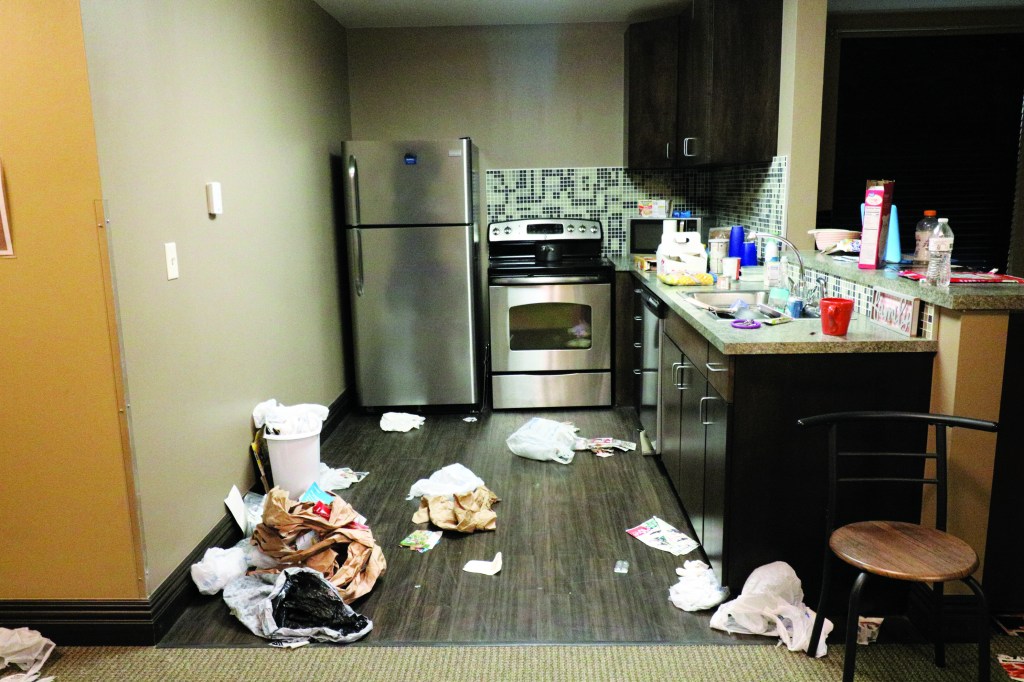
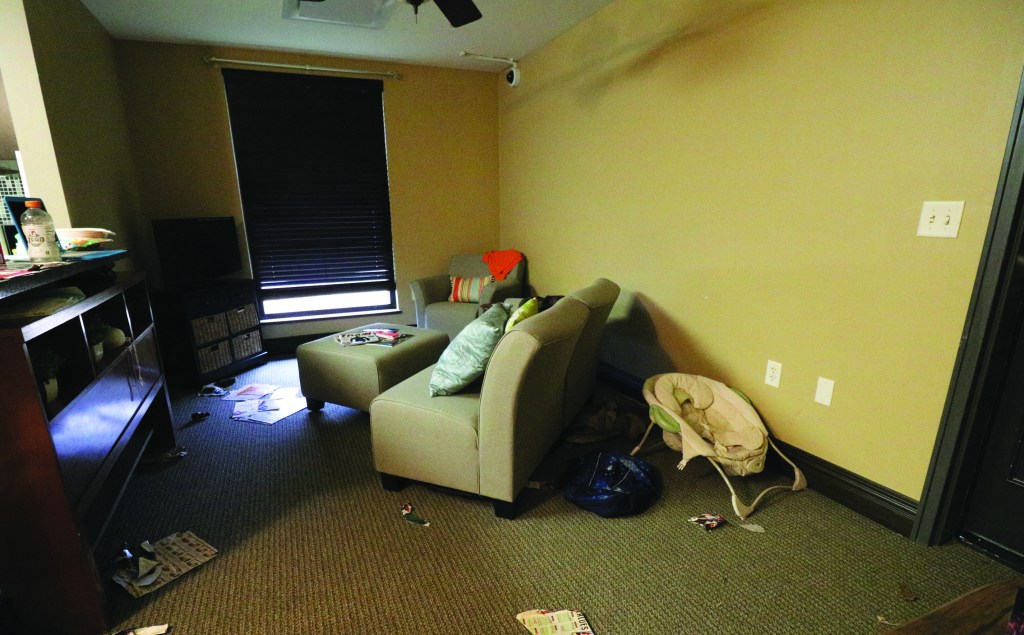

The CAST program doesn’t only help the child but also the adults in the situation. Morris allowed Eagle View staff members to walk through the mock house and investigate. The house was staged and ready for training. After letting the two visitors examine the space, Morris asked them to list a few positives that they saw. Once the ball got rolling it was easy to see that the staged situation was not as terrible as it seemed at first glance.
The mock house was staged to look dirty; there were holes in the wall. However, there was food, and the children seemed to be provided with necessities. Morris talked about how some houses are just dirty, but that is not a surefire way of knowing that they are bad. CAST students really have to look for clues. Morris talked about a time when she had a narcotics officer come investigate the mock house and how even an already trained professional came out on the other side learning new things that they had never thought about before.
Their partnership has allowed us to impact a larger reach to equip individuals with the necessary tools to recognize and respond to child abuse and trauma.
Melanie Halbrook, Children & Family Advocacy Center
Melanie Halbrook, the director of community relations for the Children & Family Advocacy Center, told the Eagle View, “CAST has provided a multitude of opportunities not just for students in our community, but for our current workforce. Their partnership has allowed us to impact a larger reach to equip individuals with the necessary tools to recognize and respond to child abuse and trauma. Their courses are specifically geared and designed to better prepare developing professionals to give them an advantage once they enter the field. It’s an honor to be included alongside CAST and to see the positive impact it has on children and families and the lasting impact it will make on future generations in our community.”
 Eagle View Blog & Community Media